

How Basler AG gives machines the power to see
A problem with bought-in cameras helped turn Basler AG into a camera supplier. Today, its business stretches from lighting an object to analysing what the picture reveals.
Basler AG’s camera business grew out of a familiar frustration: the equipment it bought kept letting it down. Founded in Lübeck in 1988, the German company first built inspection systems, including equipment that checked CDs for PolyGram. But the cameras inside its systems were not reliable enough, then-CEO Dietmar Ley recalled in a 2013 interview. Hence, Basler AG developed its own camera in 1996 and subsequently began selling cameras to other companies. Ley also offered a memorable description of its approach to product launches: “No green banana products that are not yet reliable!” Which meant customers should not have to wait for their purchase to ripen.
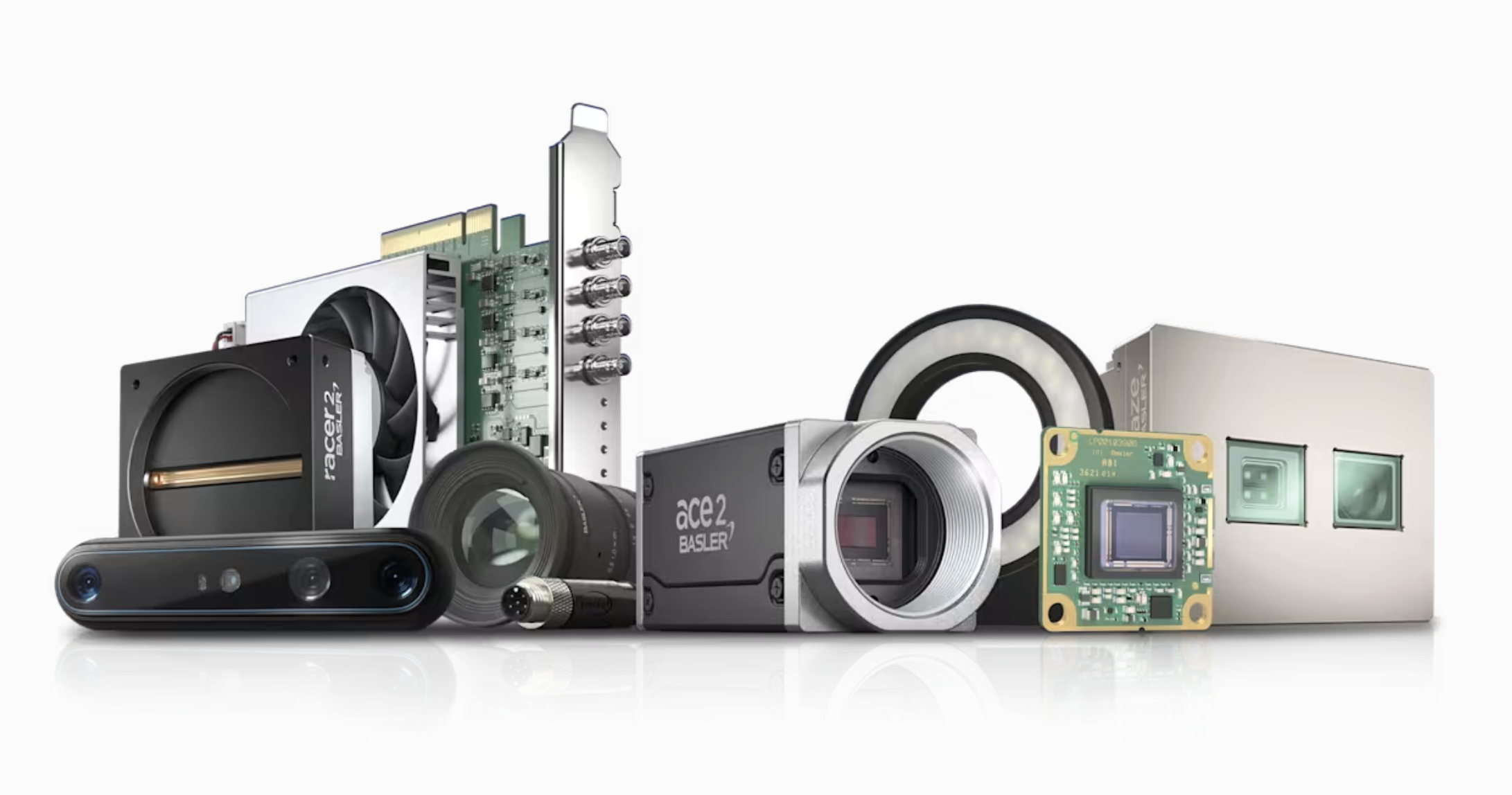
Today, Basler AG is headquartered in Ahrensburg, near Hamburg, and reports around 820 employees across 13 locations worldwide. Its range has expanded to roughly 5,000 hardware and software products serving factories, robotics, logistics and medical applications. Cameras capture images; lenses and lighting make the relevant details visible; software measures features, recognises objects and checks for defects. Basler AG supplies products across that sequence, including accessories it buys from other manufacturers and tests for compatibility. Its stated priorities are reliability, value for money and components that work together. That last point matters when the customer has to turn a collection of cameras, cables and software into a working machine.
From a picture to a decision
On a production line, those components have to answer a practical question: does this part pass inspection? Machine vision uses images to measure, identify or inspect objects, then sends the result to the equipment around it. Basler AG’s can-inspection example shows what that involves. Cameras watch aluminium cans moving along a conveyor, while its pylon AI software counts them, identifies fallen cans and flags possible dents or deformations. The practical challenge is to recognise faults while the cans keep moving through production, which makes image capture and analysis parts of the same job.
What customers actually buy
Customers buy Basler AG’s hardware and software to build machines that measure parts and spot defects. Cameras, lenses and lighting capture the detail; software turns the images into inspection results.
Basler AG sells licences to run individual image-processing tools or bundles in an inspection system. The company says these purchased licences do not expire.
Customers can also pair Basler AG’s cameras with someone else’s analysis software. Basler AG’s 2025 case study describes how IUNA AI Systems uses this approach to inspect welds at a German car manufacturer. Cameras mounted on robots and in fixed positions capture the welds, and pylon coordinates image capture. IUNA’s software then combines measurement rules with deep learning to examine them. “Our developers get on well with the pylon software,” IUNA technical director Tong Chen says in the published account. Here, Basler AG supplies the cameras and capture software, while IUNA provides the inspection application.
Basler Vision Simulation
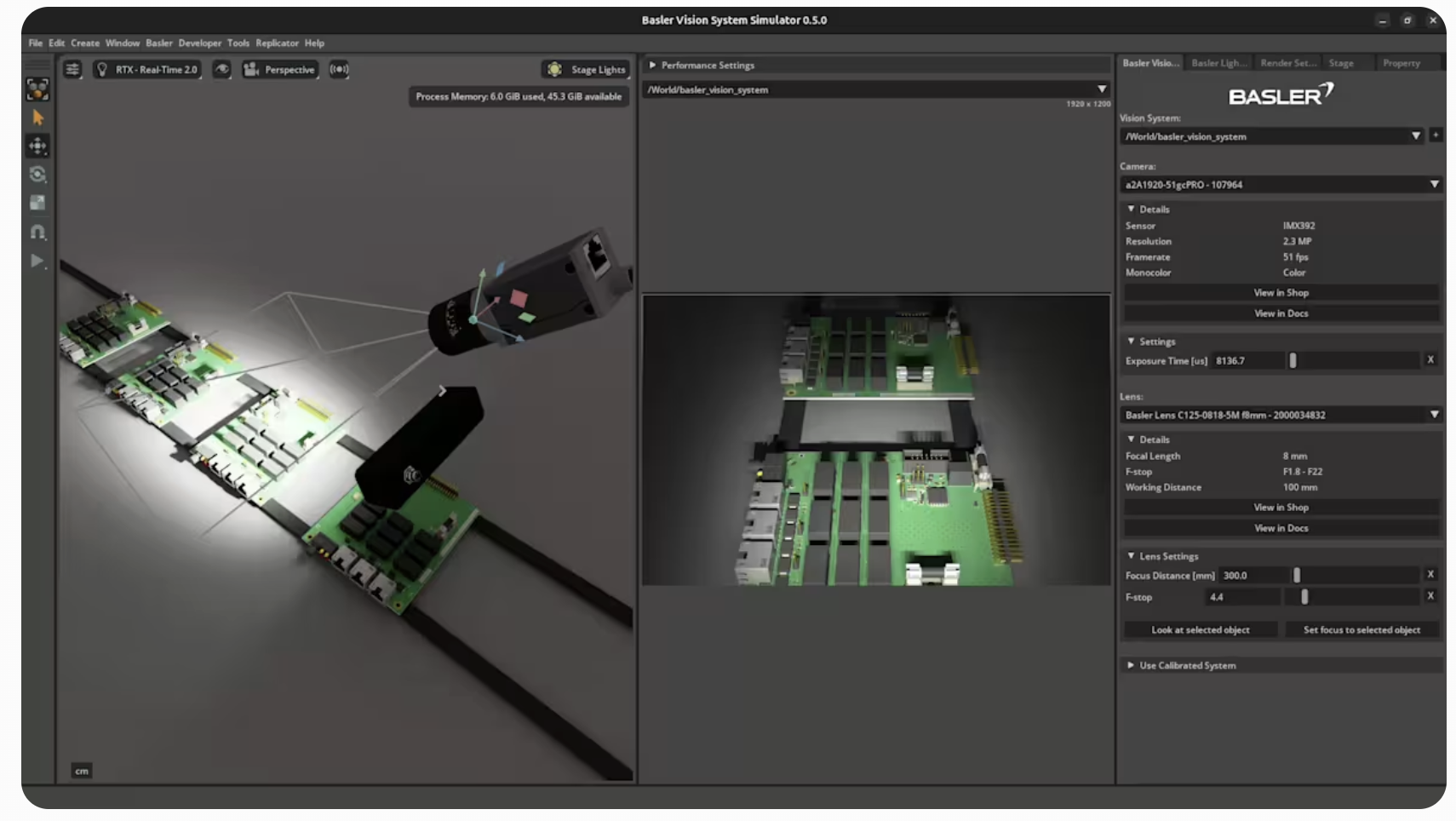
Basler Vision Simulation lets engineers build and test an inspection setup on screen before assembling the hardware. Basler AG’s software models cameras, lenses and lights, so developers can change the camera position, exposure or lighting and see how the resulting image changes. The company lists more than 250 camera models, 30 lenses and 14 lights. There is no need to reach for a screwdriver to try the next combination.
Those virtual scenes can also produce labelled images for training AI. Developers can vary the objects, their arrangement and the camera settings to generate different examples, including simulated defects. Basler AG offers the tool free through an early-access programme; that version is not intended for production use.
A market with several ways in
Basler AG competes for spending on industrial cameras, software and the equipment that connects them. Global Market Insights estimates the wider industrial machine-vision market was worth US$6.8 billion in 2025, including US$4.31 billion spent on hardware. The estimate also covers software and services such as installation and maintenance. Basler AG sells into several of those categories; the total includes spending beyond its own product range.
Customers have plenty of choices within that market. Germany’s IDS sells uEye cameras and IDS peak software for configuring them and handling their images. Cognex’s In-Sight 3800 combines imaging and processing in one vision system, with both AI and rule-based inspection tools. Keyence’s VS series takes a similar smart-camera approach, also offering AI and rules-based checks. These are different ways to put an inspection together, depending on the equipment and software the customer wants to use.
Industry standards support that choice. The European Machine Vision Association’s GenICam standard gives software a common way to communicate with cameras, including consistent names for their features. The IUNA installation shows how a customer can combine suppliers in practice. For Basler AG, the commercial question is how often a camera customer also chooses its lenses, lighting or analysis tools. A broad catalogue puts those products within reach; the customer still chooses what goes in the basket.
In its August 2026 presentation, Basler AG described recovering demand across several customer industries, alongside intense competition, particularly in China and Asia Pacific.
Financial facts
Sales rose by roughly a third in the first half of 2026, while operating profit more than tripled.
Group results for January to June, in € million. The 2025 comparisons were restated in the 2026 report.
| Reported figure | H1 2025, restated | H1 2026 |
|---|---|---|
| Revenue | 111.7 | 152.4 |
| Operating profit | 8.6 | 31.1 |
Calculated from the reported figures, each €1 of sales produced about 20 cents of operating profit, up from about 8 cents. Basler AG attributes the improvement in its gross profit margin to higher production utilisation, efficiency measures and favourable currency movements.
Explore Basler AG’s full financial statements and reported results.
What’s ahead
At VISION in Stuttgart, from 6 to 8 October 2026, Basler AG plans to demonstrate cameras inspecting moving materials and software for testing inspection setups virtually. Its Vision Simulation software lets developers try camera, lens and lighting arrangements before assembling the hardware. Basler AG offers it through an early-access programme and says that version is not intended for production use.
There is also a more immediate delivery question. In its August half-year report, Basler AG warned that an earthquake-related stoppage at a Sony image-sensor plant could reduce its own production in September and October. Its next scheduled financial update, on 4 November 2026, offers a point to check how that warning translated into deliveries and results. An investor webinar is scheduled for the same day.
Read our Basler AG company profile for more on its products, business and financial results.
Share this article
Sources
- Basler AG’s founding and company milestones
- Dietmar Ley’s account of Basler AG’s development
- Basler AG’s company overview and stated principles
- Basler AG’s locations
- Basler AG’s hardware and software portfolio
- Can-inspection application
- Image-quality documentation
- pylon software
- Measurement and processing tools
- vTool licensing
- IUNA installation and customer comment
- Industrial machine-vision market estimate and scope
- IDS peak
- Cognex In-Sight 3800 reference manual
- Keyence VS series
- EMVA’s GenICam introduction
- Basler AG’s August presentation, slide 4
- Basler AG’s six-month report 2026, pages 2, 3, 8 and 18
- Basler AG at VISION 2026
- Basler Vision Simulation and early-access terms
- Basler AG financial calendar