

Exail Technologies SA and the robots that go first
The French group builds robots that help navies find underwater mines while crews stay farther away. Its less visible business makes sure those robots know where they are.
Exail Technologies SA has a robotic fish in its family tree. In 1970, ECA developed a mine-disposal robot for the French Navy called PAP, short for Poisson Auto-Propulsé, or self-propelled fish. A fairly modest name for equipment sent to do a dangerous job. ECA itself dated back to 1936, when French engineers Marcel Gianoli and Paul Rozycki founded Études et Constructions Aéronautiques.
That business became part of today's Exail Technologies SA when ECA and navigation specialist iXblue came together in 2022. The Paris-based group now supplies maritime robots, navigation instruments, photonics and aerospace equipment. It can sell a customer the robot, some of the technology inside it, or a complete system that coordinates several machines. For those systems to work, a robot has to move, know where it is and bring useful information back to people who can act on it.
A boat carrying smaller robots
Navies buy Exail's UMIS system to investigate and clear underwater mines while reducing the need to send crews close to them. The purchase brings together vehicles, sensors, control software and training. Buying the robot alone would leave quite a lot of the job unfinished.
The Inspector 125 surface vessel carries smaller underwater vehicles and provides a communications link to operators on a ship or ashore. An A18-M underwater robot surveys the seabed with sonar, which uses sound to form an image. Other vehicles inspect suspicious objects more closely or handle mine disposal. Exail's Umisoft software helps operators plan the work, control the equipment and review the data.
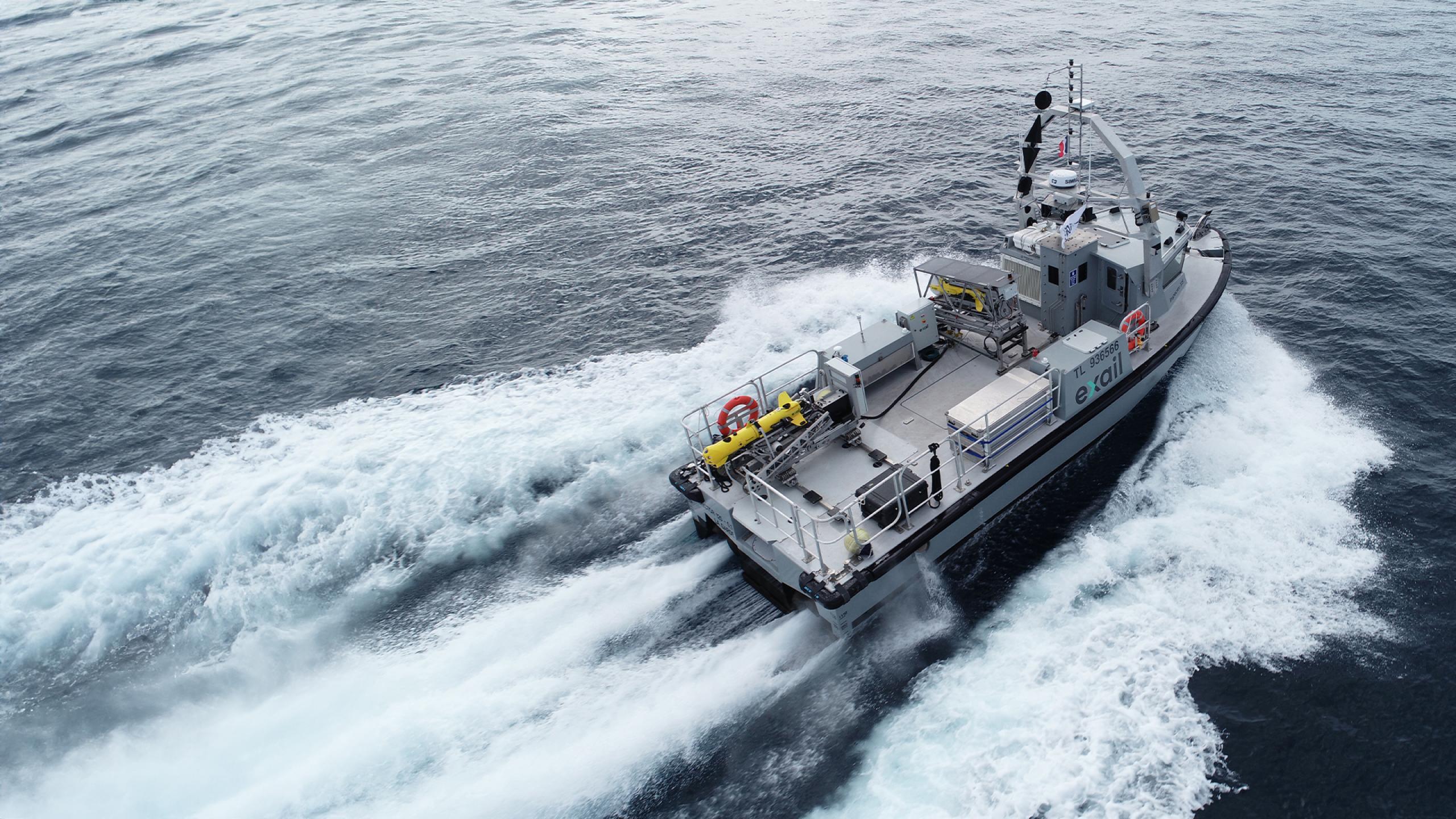
This is already a procurement business, rather than a collection of exhibition prototypes. The Belgian-Dutch programme awarded in 2019 covers twelve ships and around a hundred drones. Naval Group is responsible for the ships and overall integration; Exail supplies the unmanned-vehicle system. In November 2024, Exail described equipment delivered to the Royal Netherlands Navy for operational testing and training. Its 2025 results subsequently reported delivery of an initial operational mine-countermeasures capability to the two navies. Those are steps in a longer programme, not completion of the whole fleet.
Knowing where you are without GPS
An underwater survey must show what the sonar sees and where it saw it, so crews can use the findings to plan further inspection. Exail’s A18-M combines sonar, navigation and onboard processing to produce that information. Its navigation system has to keep working while submerged, where satellite signals cannot provide a usable position fix.
Exail sells these navigation instruments for survey vessels, offshore work and vehicles built by other manufacturers, so a customer does not need to buy an entire Exail robot to use its technology.
The work after the first delivery
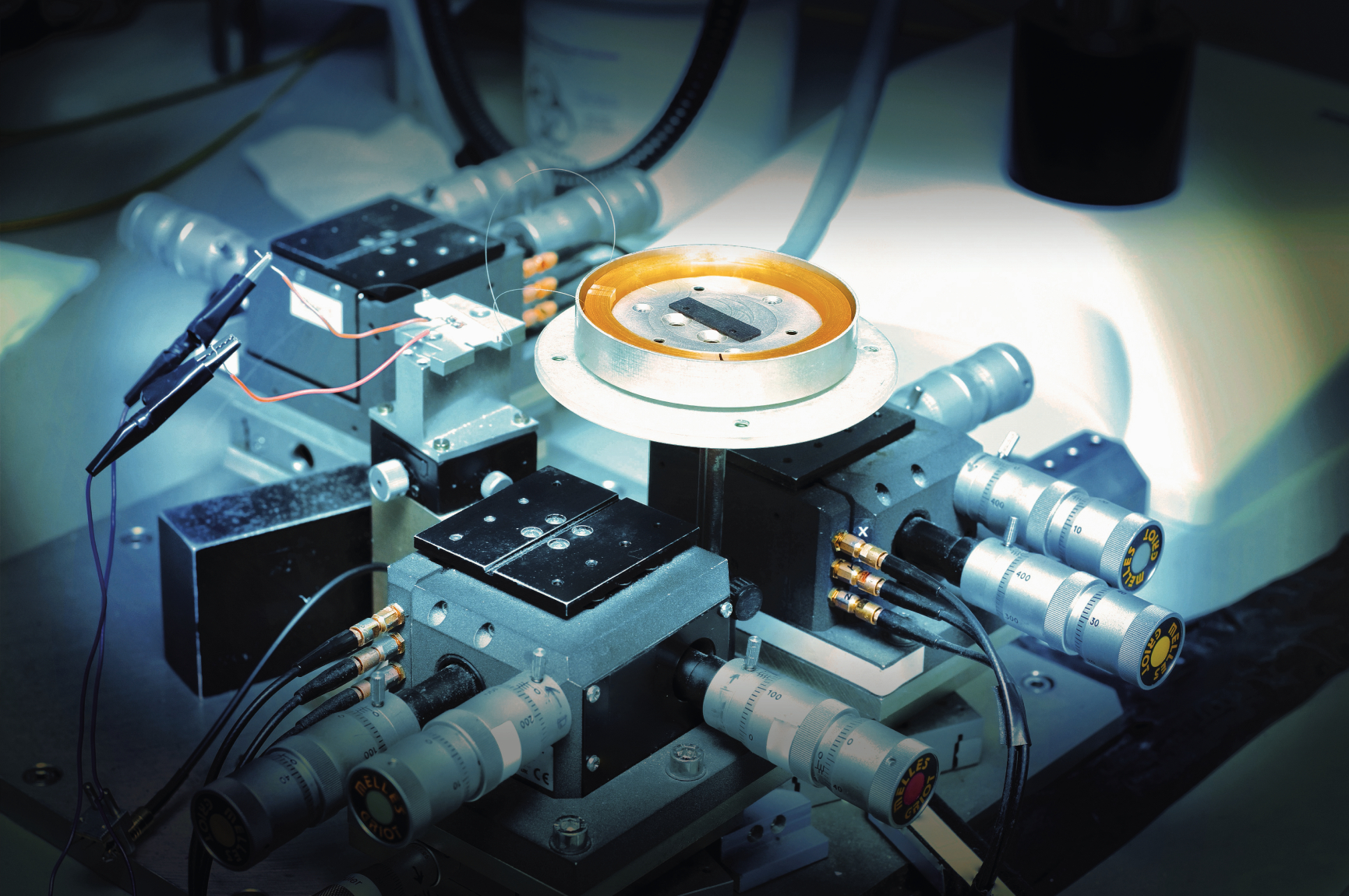
By manufacturing the optical components used in its navigation products, Exail gives its engineers control over several parts of the system, from the sensing components to the finished instrument. The company also sells optical fibres, components that control light and aerospace equipment for uses beyond its own robots.
For a navy, the relationship extends well beyond taking delivery of a vehicle. Crews need training, equipment needs maintenance and software must work with the rest of the mission system. Exail's Ostend facility combines production with training and access to the North Sea. That support matters because a new drone is considerably less useful if the crew cannot launch, operate and recover it reliably.
A market built around fleet replacement
In its 2025 annual report, Exail identified an addressable underwater mine-clearance market of around €3 billion over the following fifteen years. It said more than 70% of the more than 300 mine-hunting vessels in its addressable markets were over twenty years old. This is the company's estimate of a defined replacement opportunity over many years. It is neither annual industry revenue nor a promise of orders for Exail.
Maintenance, additional equipment and consumables can bring further business after the initial system delivery. Winning that work still requires customers to choose Exail, fund their programmes and accept the equipment. Defence budgets do not arrive in the order book simply because they have been announced.
There are established alternatives. Saab's Double Eagle SAROV can operate autonomously for survey work or as a remotely operated vehicle for mine disposal. Thales supplies a broader integrated system under the Franco-British MMCM programme and announced delivery of its first production system to the Royal Navy in March 2025. Customers are choosing combinations of vehicles, sensors and support, as well as deciding how much integration they want a supplier to handle.
Financial facts
Exail's July trading update showed higher sales but fewer new orders in the first half of 2026. The figures below cover January to June and are in € million.
| Reported figure | H1 2025 | H1 2026 |
|---|---|---|
| Revenue | 220 | 275 |
| New orders | 612 | 228 |
Revenue grew by 25% as reported, or 27% on a comparable basis after adjusting for the sale of the Automation business. The order comparison reflects the timing of large programmes, including a €400 million contract won in early 2025. A quieter order period can therefore coincide with rising sales as previously signed work moves through production.
On 14 September, Exail said preliminary current EBITDA for the half-year should reach €63 million, about 43% higher. This is the company's adjusted earnings measure, not net profit, and the half-year accounts had not yet been approved by the board. It also reported an approximately €70 million increase in working-capital needs and expected substantial customer receipts in the second half. Delivering more equipment and collecting the cash follow different timetables.
Explore Exail Technologies SA's financial statements and reported results.
A possible new owner
Thales is also the proposed buyer of Exail. The companies signed a tender-offer agreement on 30 July 2026, following an agreement to acquire the Gorgé family's 35.51% stake. The proposed offer price is €134 per share. Their announced timetable puts completion of the family-stake acquisition by the third quarter of 2027, subject to regulatory approvals, followed by a mandatory offer expected to close by early 2028 at the latest. These remain proposed transactions, not a completed takeover.
The nearer date is 24 September 2026, when Exail now plans to publish its full half-year results after the market closes. The company moved the release from 15 September while discussing the accounting effects of the proposed Thales transaction with its auditors. That report should add detail to the preliminary earnings and working-capital figures. Meanwhile, the business still has boats to deliver, instruments to build and crews to train.
Read our Exail Technologies SA company profile for more on its activities and financial history.
Share this article
Sources
- Exail Technologies' company history and the PAP robot
- Exail Technologies' activities and the ECA–iXblue combination
- Exail Technologies' 2025 annual report, including the market estimate on printed page 13
- Inspector 125 surface vessel
- A18-M underwater vehicle and sonar
- UMIS integrated mine-countermeasures system
- Naval Group on the Belgian-Dutch programme and each supplier's role
- Royal Netherlands Navy operational testing, November 2024
- Exail Technologies' 2025 results and delivery milestones
- How Exail's fibre-optic gyroscopes work
- Exail navigation systems and additional sensor inputs
- Exail's Ostend production and training facility
- Saab's Double Eagle family
- Thales' MMCM delivery to the Royal Navy, March 2025
- Exail Technologies' second-quarter and first-half revenue update, July 2026
- Preliminary half-year figures and revised results date, 14 September 2026
- Thales and Exail Technologies' tender-offer agreement, July 2026